




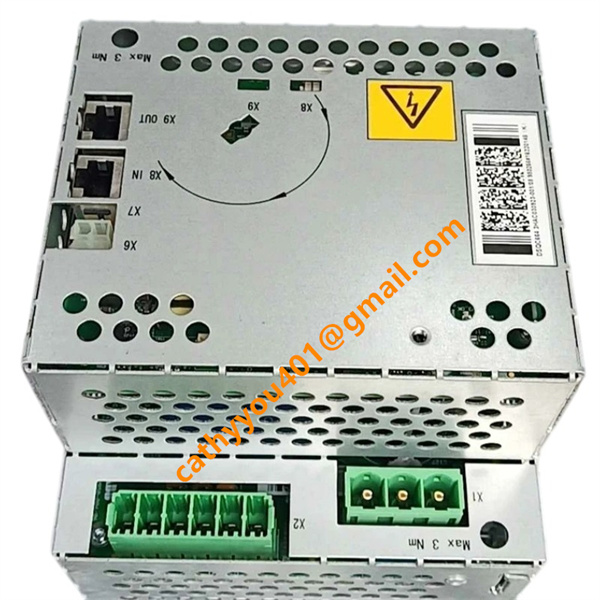
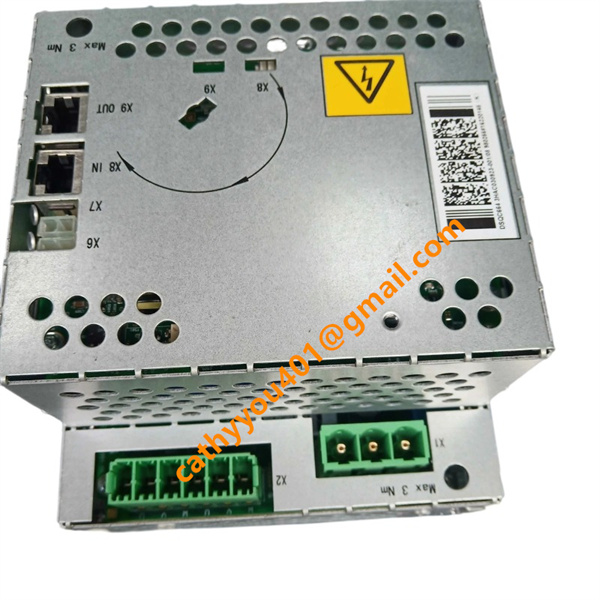







Description
-
BrandABB
-
ModelDSQC664
-
Product NameDSQC664 High Voltage Drive Unit
-
Place of OriginSwitzerland
-
HS Code85044095
-
Dimensions150 mm × 140 mm × 179 mm
-
Weight2.36 kg
-
Operating Temperature0 °C to 45 °C
-
Storage Temperature-20 °C to 70 °C
-
Part Number3HAC030923-001
-
Warranty12 month
-
Product StatusNew and original
Backed by abundant in-stock inventory and nearly 20 years of industry experience, our company stands as a leading player in the industrial control sector.We offer an extensive range of industrial control products covering numerous models. Should you have any other requirements, please feel free to contact us, and we will respond to you promptly.
Our main brand:
1.ABB's module cards, touch screens, controllers, etc., such as PP846 touch screen, IGCT starting with 5SHY, PM starting controller, AI, DO starting input/output module, SP starting Bailey module, etc
2.GE's module card CPUs, such as VMIC starter, IS200, IS215, IS400, IS420 series, etc,
3.Emerson's card components and EPRO probes, Westinghouse 1C series, Honeywell CC series, Schneider 140 series, Envision full series, Bentley 3500 series, Rexroth motors and drives, and Foxboro small modules.
Overview: The DSQC664 serves as an ADU HV drive unit compatible with the IRC5 robot controller, designed to drive external servo axes.
Power Input
DC bus input: High-voltage DC power fed by the IRC5 main power unit to supply the power stage.
24 VDC control power input: Powers internal logic, monitoring circuits and communication modules.
Protection Related Inputs
Hardware enable input: Axis enable signal to activate the drive unit.
Emergency stop and safety chain monitoring input.
Motor Interface Outputs
3-phase AC output (U/V/W) connected to stator windings of the servo motor.
Motor brake output: 24 VDC output for controlling the motor holding brake.
Feedback Interface
Encoder input: Receives serial encoder signals from the servo motor, including position, speed and commutation information.
Communication Interfaces
Internal drive bus: Serial communication channel exchanging motion commands and status feedback with the IRC5 main computer.
Diagnostic & Status Signals
Fault status is transmitted internally to the controller; no external discrete digital I/O terminals are available.
Monitoring Signals
Internal monitoring for temperature, DC bus voltage and motor current; relevant data is transferred via the internal drive bus.

Cut off all power supplies of the IRC5 controller and wait until residual voltage on the DC bus fully dissipates prior to commencing wiring.
1.Securely install the DSQC664 in its allocated slot within the IRC5 cabinet and connect the protective earth terminal to the cabinet grounding system.
2.Route the high-voltage DC bus cable from the IRC5 main power unit to the DC bus input terminals on the DSQC664.
3.Terminate the 24 VDC control power cable to feed internal logic, monitoring and communication circuits.
4.Wire safety circuits for hardware axis enable input and emergency stop chain monitoring in compliance with schematic diagrams.
5.Attach the motor power cable to the DSQC664 three-phase AC output terminals (U/V/W); strictly follow the specified phase sequence for the servo motor.
6.Connect the 24 VDC control wiring for the holding brake between the drive unit and servo motor.
7.Insert the serial encoder cable into the encoder feedback port; implement correct shielding arrangements for encoder signal cables.
8.Install the internal drive bus communication cable to establish connection between the DSQC664 and IRC5 main computer.
9.Separate high-voltage cables from signal cables during routing; properly ground the shielding terminals of shielded cables.
10.Conduct visual inspection of all connectors, confirm terminal tightness, and eliminate risks of reversed polarity and short circuits.
11.Recheck safety chain wiring, motor phase sequence, encoder connections and grounding points.
12.Close the cabinet enclosure once all wiring inspections are finished.
13.Energize the IRC5 controller in sequence and confirm the DSQC664 starts up without fault alarms.
14.Configure the external axis parameters through RobotStudio, and validate encoder communication as well as motor brake control.
15.Carry out jogging test to confirm motor rotating direction; swap any two phases of the motor power cable if rotation direction needs correction.
16.Execute continuous operation testing to monitor drive temperature, DC bus voltage and axis status signals.
17.Document relevant wiring details and clear temporary fault logs after all tests are completed successfully.

Frequently Asked Questions (FAQ)
1.How fast will you reply to my inquiry?
We process all inquiries efficiently and will respond promptly once we receive your message.
2.Do you carry large inventory of industrial control parts?
We maintain massive ready stock of mainstream automation spare parts to shorten lead times.
3.Can you source discontinued or obsolete PLC & DCS modules?
Absolutely.
We specialize in sourcing hard-to-find, obsolete and out-of-production industrial control components.
4.Do you inspect goods before shipment?
Every product undergoes thorough inspection before packing and dispatch.
5.Can you ship orders worldwide?
We provide global shipping with flexible logistics for urgent and regular orders.
6.What payment methods are available?
We accept multiple secure payment options. Please contact our sales team for detailed terms.
7.Do you offer warranty on industrial control spare parts?
Warranty differs by product.
Confirm specific warranty details with us prior to ordering.
8.Are your automation parts new or used?
We supply both new and fully tested used industrial control spare parts.
Please state your needs in your inquiry.
9.What is your typical delivery lead time?
In-stock items can be shipped quickly.
We will advise exact lead time for out-of-stock products after stock verification.
10.Can you offer technical support to check model compatibility?
Yes.Our professional team provides technical support to verify specifications and model compatibility.