





.jpg)
.jpg)
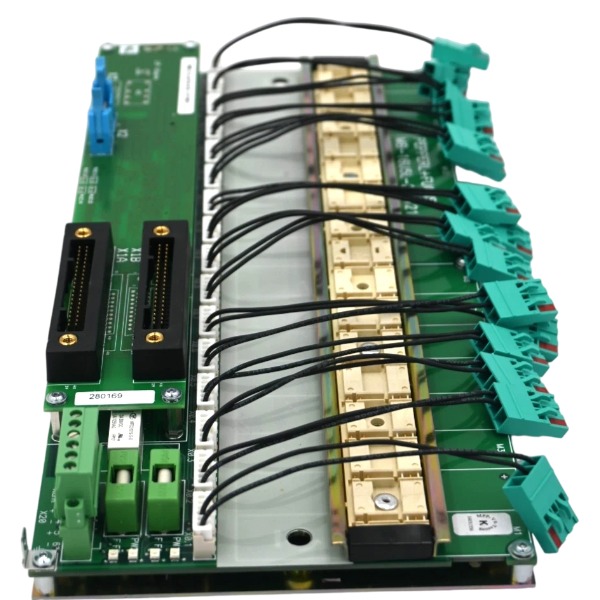







Description
-
BrandPEPPERL+FUCHS
-
ModelMB-C3-AI16-KS-131961
-
Product Name16 Channel Analog Input Module
-
Place of OriginGermany
-
Customs HS Code85389000
-
Power Supply120 mA @ 24 V DC
-
Dimensions110 mm × 75 mm × 25 mm
-
Weight0.32 kg
-
Operating Temperature-20°C to +60°C
-
Storage Temperature-40°C to +85°C
-
Warranty12 month
-
Product Statusnew
Troubleshooting Guide for MB-C3-AI16-KS-131961, Pepperl+Fuchs
No power LED indicator
Check whether the input supply voltage complies with the rated specification;
Inspect power terminals for loose connections, reversed polarity or short circuits;
Examine the fuse of the power circuit;
Remove abnormal loads and perform a power cycle on the module.
Communication failure with host system
Inspect bus cable connections and termination resistor settings;
Ensure the station address, baud rate and communication protocol are consistent with the controller configuration;
Check for cable damage, improper grounding and electromagnetic interference generated by adjacent high-power equipment;
Replace the communication cable for verification;
Reboot the bus master and the I/O module.
No analog input signal or zero reading on all channels
Check 4-20mA / 0-10V sensor wiring for open circuits and incorrect terminal assignment;
Confirm the power supply for field sensors works properly;
Verify the channel signal type (current or voltage) matches the connected transmitter;
Check whether the channel is disabled in software configuration;
Shift the sensor to a healthy channel to distinguish faults between the module and transmitter.
Analog signal drift, instability or fluctuating readings
Check terminals for poor contact and corroded pins;
Optimize cable shielding and route signal cables separately from power cables;
Confirm the ambient temperature stays within the module operating range;
Check the calibration status of the field transmitter;
Eliminate ground loop potential difference between the module and field instruments.
Single channel fault alarm
Retrieve diagnostic codes from the host control system;
Disconnect field wiring of the faulty channel to determine if the fault originates from the module hardware or field side;
Check the signal loop for overload, short circuit or wire breakage;
Reset channel parameters and download the configuration again.
Overheating and overtemperature alarm
Check ambient ventilation and heat dissipation conditions;
Ensure the total load current of all AI channels does not exceed the rated limit;
Keep the module away from nearby heat sources;
Clear dust accumulated on the module surface.
Unrecognizable module after replacement
Confirm consistency of model number and hardware version;
Re-download station configuration and signal mapping parameters;
Verify the GSDML file version used in the PLC project;
Execute hardware identification and reassign the device name.
General reset procedure
Back up all configuration data before operation;
Cut off power for a minimum of 30 seconds and re-power the module;
Factory reset is only allowed when software configuration corruption is confirmed; full reconfiguration is required afterwards.

Check LED status first
Power LED off: indicates faults related to power supply, fuse or power wiring;
Bus/COM LED red or blinking: points to communication issues (bus cable, termination resistor, station address, baud rate);
Channel LED alarm: indicates a fault on the individual channel loop (wire break, short circuit, overload).
Read diagnostic codes from PLC / host software
Retrieve channel error flags including wire break, short circuit, overrange and configuration mismatch;
Identify whether the fault affects the entire module (global fault) or only specific channels.
Isolation test for fault zoning
If all channels behave abnormally: prioritize checking module power supply, bus communication or hardware defects;
If only one or several channels fail: focus on field wiring, transmitter or channel configuration.
Swap test (fastest judgment method)
Reconnect the faulty sensor cable to a verified healthy channel;
If the fault moves together with the sensor: the transmitter or field wiring is defective;
If the fault remains on the original channel: the module’s channel hardware is damaged.
Field wiring disconnection verification
Remove the terminal wiring of the faulty channel;
If the alarm clears after disconnection: the fault comes from the field instrument or cable;
If the alarm persists: the module itself has an internal failure.
Configuration parameter verification
Check the signal type setting (4-20mA current / 0-10V voltage);
Confirm consistency of channel enable status, scaling setup and GSDML file version.
Environment and interference inspection
Check loose terminals, corrosion and ground loop issues;
Review signal cable layout, shielding condition, high-frequency interference and ambient temperature.
Quick reset validation
Power down the module for 30 seconds and restore power;
If the fault reappears right after restart, it is a permanent hardware fault rather than a temporary anomaly.

FAQ: MB-C3-AI16-KS-131961 Pepperl+Fuchs
Q1: What is MB-C3-AI16-KS-131961?
A1: MB-C3-AI16-KS-131961 is a Pepperl+Fuchs 16-channel analog input module from the MB-C3 series, designed for intrinsic safety and hazardous area process automation, used to collect analog sensor signals in explosion-proof applications.
Q2: What are the main applications of MB-C3-AI16-KS-131961?
A2: It is widely used in oil & gas, chemical, pharmaceutical, petrochemical and other process industries for hazardous zone signal acquisition, connecting 4-20mA analog transmitters, temperature and pressure sensors.
Q3: Is MB-C3-AI16-KS-131961 intrinsically safe certified?
A3: Yes. This Pepperl+Fuchs MB-C3 AI16 module supports intrinsically safe signal isolation, suitable for installation in Classified Hazardous Areas, compliant with global explosion protection standards.
Q4: What signal type does MB-C3-AI16-KS-131961 support?
A4: It accepts standard analog input signals, mainly 4–20 mA current signals from field process transmitters, for 16-channel simultaneous signal acquisition.
Q5: Is MB-C3-AI16-KS-131961 new original Pepperl+Fuchs stock?
A5: We supply brand new original Pepperl+Fuchs MB-C3-AI16-KS-131961 with full inspection before shipment; used / refurbished versions are also available upon request.
Q6: Can MB-C3-AI16-KS-131961 replace other AI modules?
A6: It belongs to the MB-C3 series platform. Cross-replacement depends on system backplane, software configuration and hazardous area certification requirements. Contact us for cross-reference check.


.jpg)

.jpg)